Working for manufacturer engineering couple years. Sharing the manufacturing experience, skill, DFx, design, and information. Be care of this blog is personal share and content may not be 100% correctly.
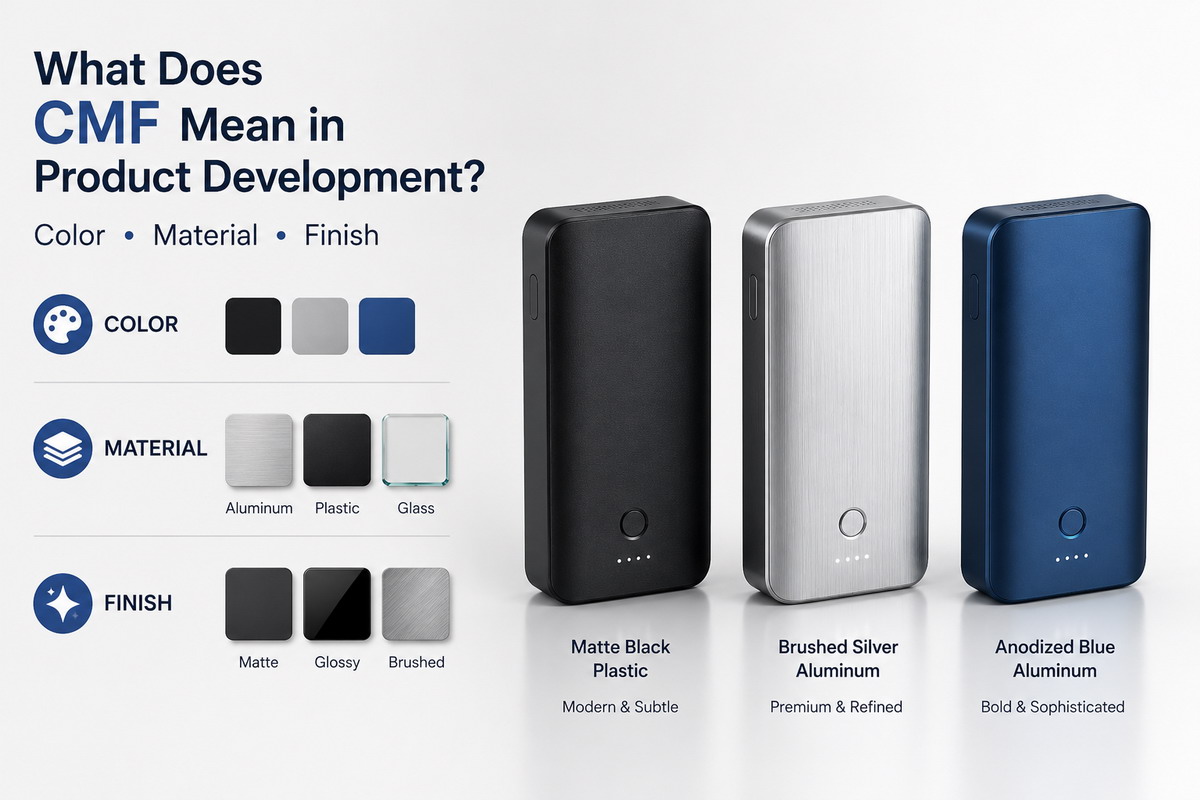
What Does CMF Mean in New Product Development Meetings?
During new product development meetings, We often hears project managers (PMs) asking mechanical engineers (MEs) to confirm the CMF with the Industrial Design (ID) and Marketing teams before moving forward with tooling development. Otherwise, it could even affect the mechanical design itself. So, what exactly does CMF mean?
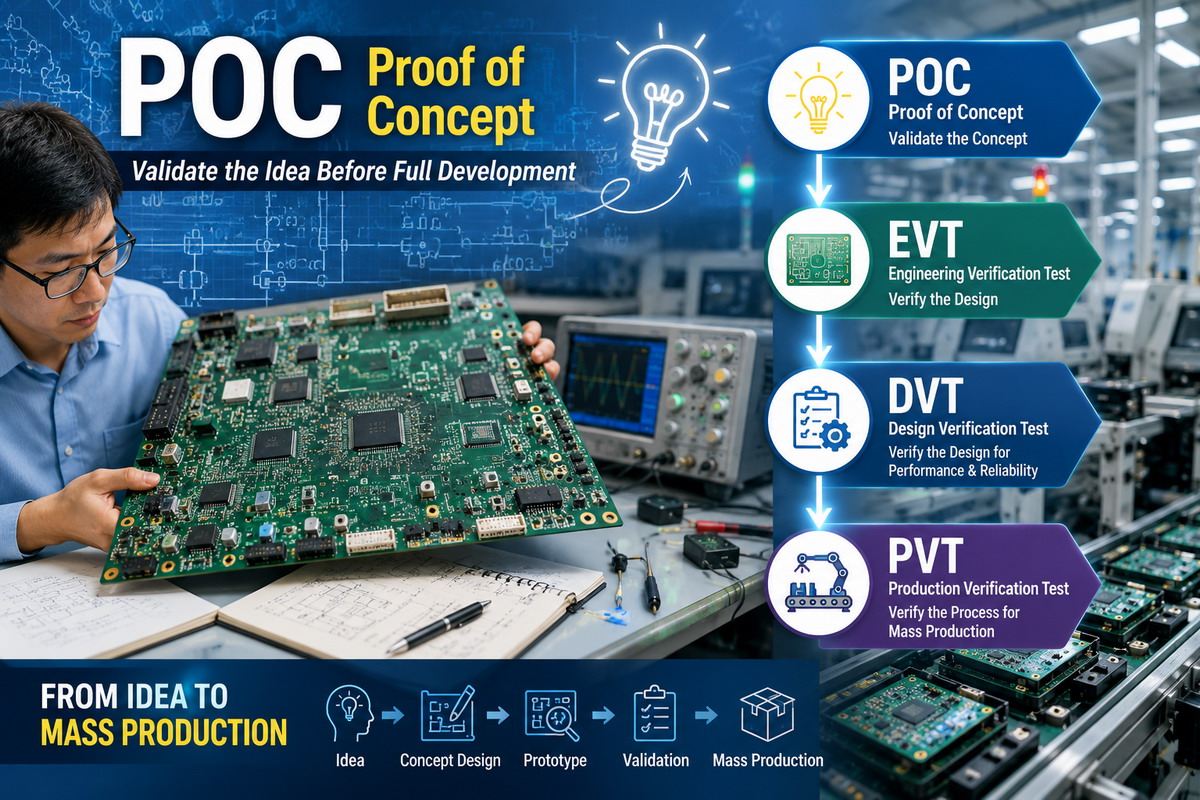
What Is POC (Proof of Concept)? Its Role and Relationship with EVT, DVT, and PVT in New Product Development(This article discusses POC from the perspective of electronic hardware product development. Since Workingbear is not familiar with software development, POC practices in software projects will not be covered here.)
A new management team often brings new management methods. Recently, a new term, POC, started appearing in Workingbear’s new product development meetings. POC stands for Proof of Concept, which simply means verifying whether a concept or idea is technically feasible.
In simple terms, the main purpose of a POC is to validate whether engineers’ concepts, theories, or innovative ideas can actually be implemented. During new product development—especially for completely new or breakthrough products—it is essential to confirm that the core concept is feasible before the entire development team moves forward. Otherwise, a company may spend a significant amount of time and money completing a product design only to discover later that the idea cannot be manufactured or the technology does not work as expected.
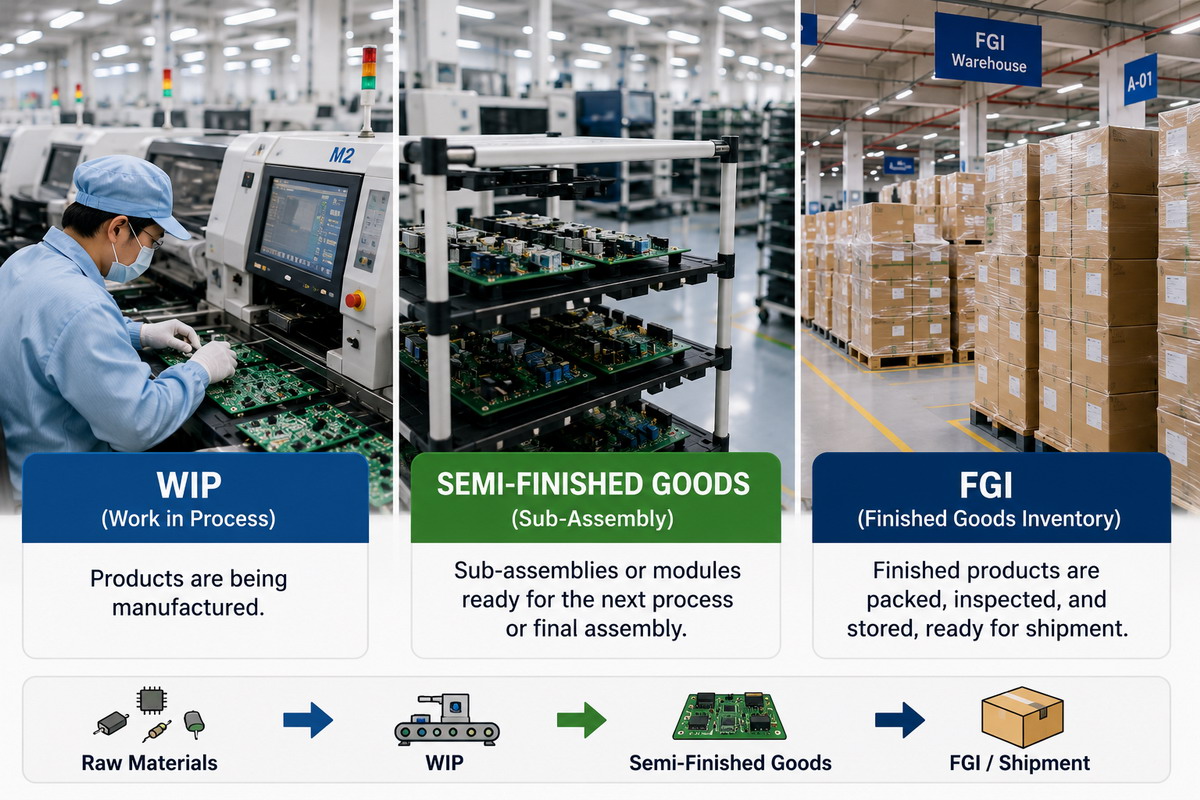
Filgure: What Are WIP (Work-in-Process), FGI (Finished Goods Inventory), and Semi-Finished Goods?
WIP stands for Work-in-Process (or Work-in-Progress), which refers to products that are currently going through the manufacturing process but have not yet been completed. In a broad sense, WIP can include semi-finished goods that have already completed certain manufacturing steps. In a narrower sense, however, WIP refers specifically to products that have not yet reached the semi-finished stage.
In many electronics manufacturing factories, a product can be considered WIP as soon as the kitting process begins. Once the product has completed all assembly operations, is packaged, passes OOB (Out-of-Box) or OQC (Outgoing Quality Control) inspections, and is officially transferred into finished goods inventory, it is classified as FGI (Finished Goods Inventory).
Figure: Why Do New Products Need Pilot Production? Exploring the Challenges, Benefits, and Lessons Learned
Many manufacturing professionals aren’t exactly excited when they’re assigned to a new product pilot build. Pilot production is often complex, fast-paced, and difficult to measure in terms of productivity or performance. Schedules are usually tight, and in the early stages, even the Bill of Materials (BOM) may not be fully finalized. Many tasks still require manual work, and new manufacturing processes often need time to be refined and stabilized.
The challenges don’t stop there. New products typically introduce new components, many of which arrive as bulk parts or tube-fed components instead of production-ready reels. This can create headaches for SMT assembly lines, forcing operators to place parts manually before the boards can enter the reflow oven. The situation is often even more labor-intensive during final assembly, where a significant amount of manual work may still be required.
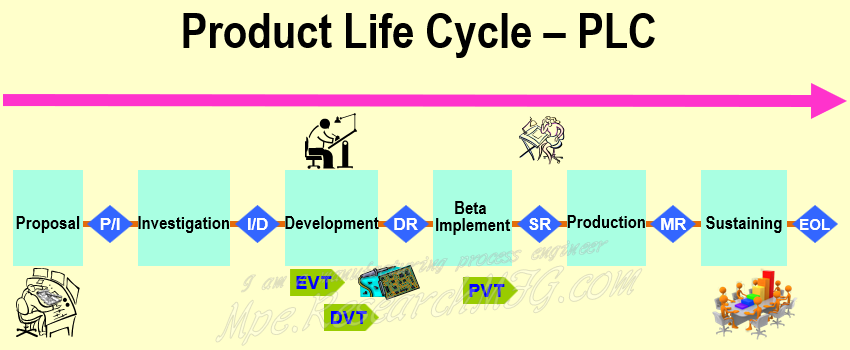
Figure:Product Life Cycle (PLC) Explained: A Complete Guide to New Product Development in Electronics Manufacturing
Product Life Cycle (PLC) is a framework used to manage a product throughout its entire journey—from the initial idea and market validation to development, production, continuous improvement, and eventually End of Life (EOL). While the exact process may vary from company to company, most follow a similar path to guide products from concept to market in a structured and controlled way.
In the electronics industry, PLC is more than just tracking whether a product grows or declines in sales. It helps companies make decisions, align cross-functional teams, manage risk, and balance time, cost, quality, and market expectations throughout development and production.